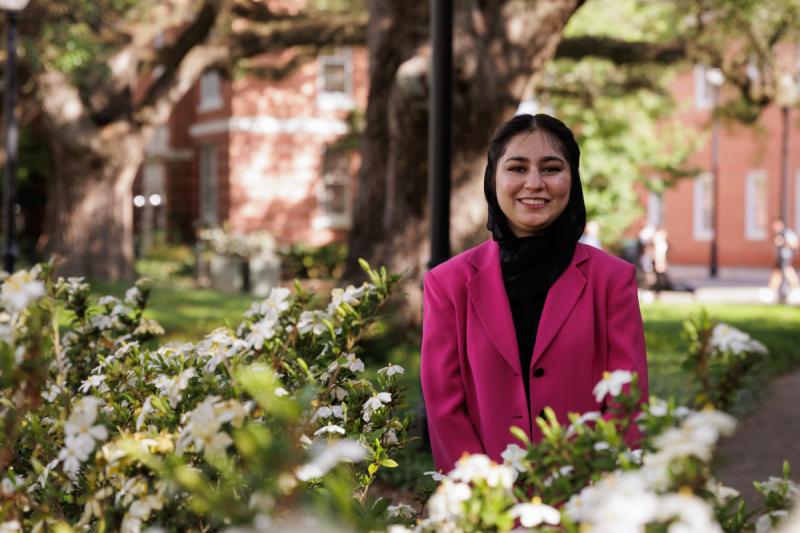
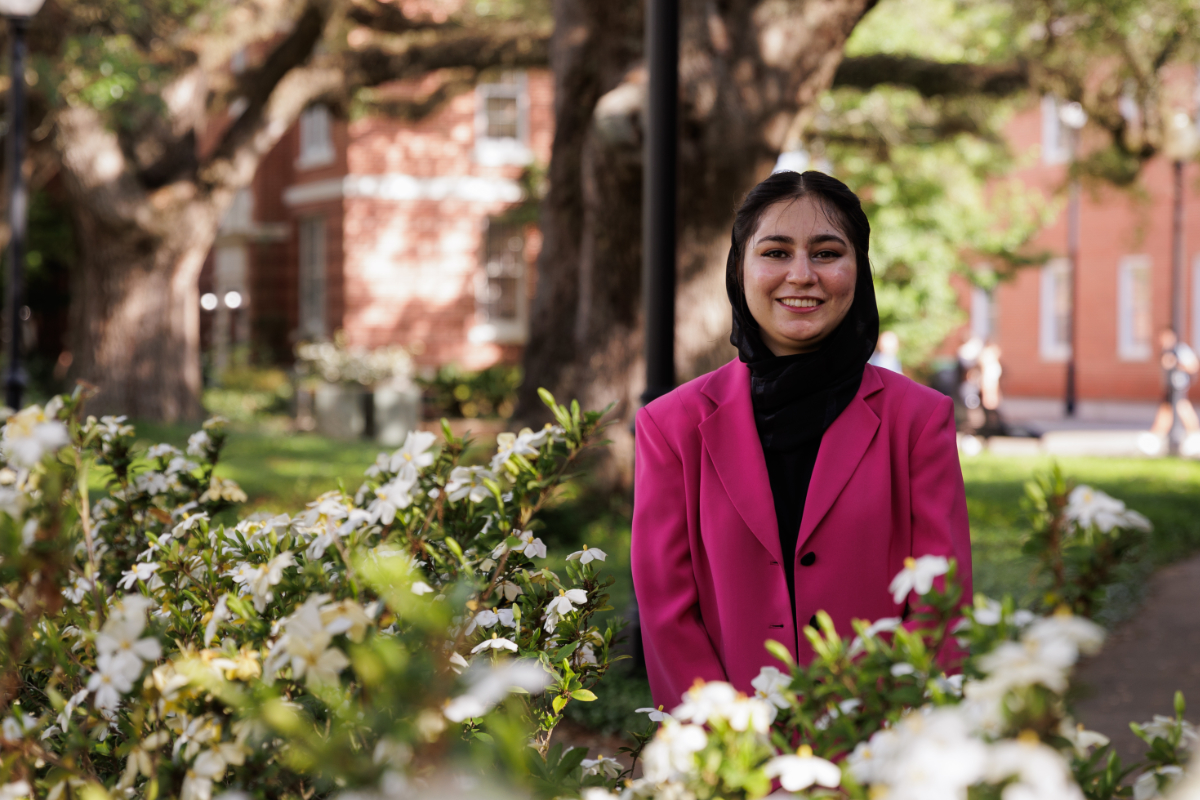
Environmental resource science graduate student Natasha Syed chose to attend the University of Louisiana at Lafayette for its Carnegie R1 research designation and interdisciplinary Environmental Resource Science program.
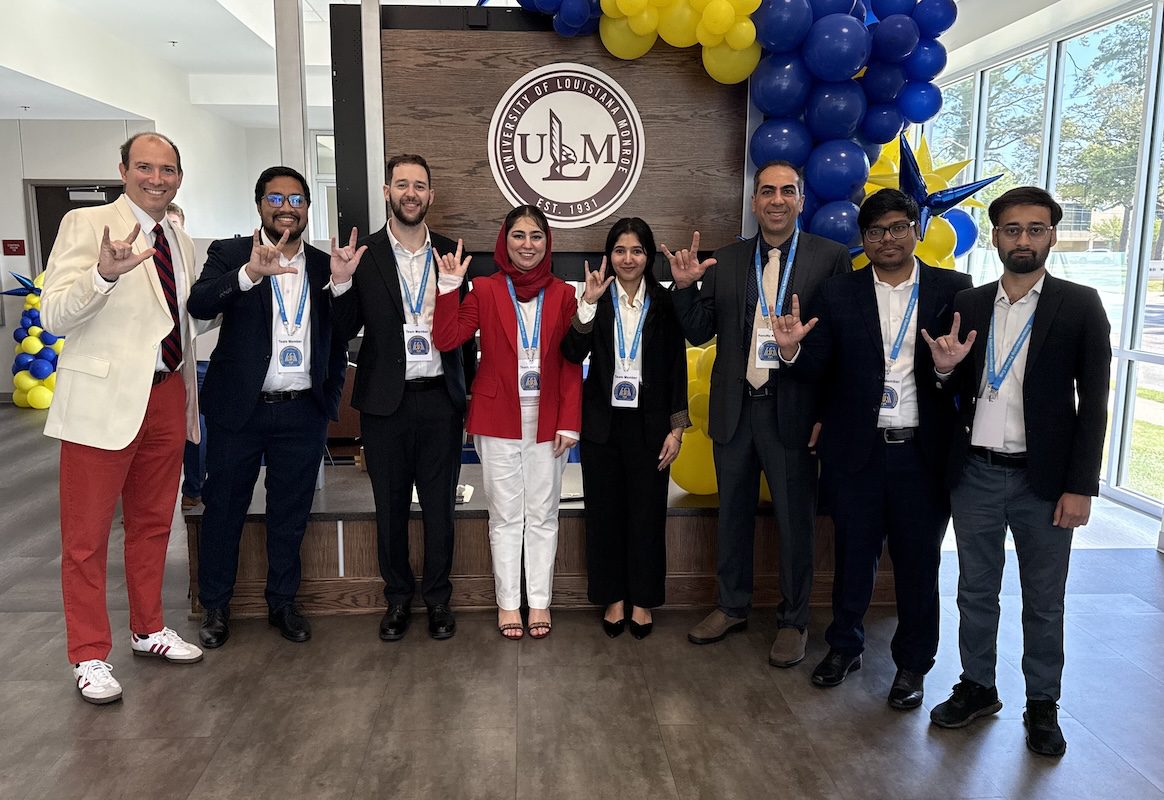
Syed made the most of her experience in the master’s program, recently earning third place and a $10,000 prize at the Entrepreneurship Pelican Cup, Louisiana’s premier business plan competition. Syed’s team presented a pitch to reimagine organic gardening through plant pods. Out of 44 entries, “Team Bio-Pod” was one of two UL Lafayette teams selected as finalists in the graduate division.
“The experience required developing a full business plan, presenting to panels of investors and delivering a 90-second elevator pitch, all while keeping up with coursework,” said Syed. “It was intense but incredibly rewarding.”
Syed credits Dr. Brian Schubert, professor and interim director of the School of Geosciences, and Jonathan Shirley, program manager at the Louisiana Entrepreneurship & Economic Development Center, for supporting Bio-Pod from the beginning. She said Shirley taught her how to communicate a scientific idea as a business opportunity, and Schubert helped her navigate the environmental resource science program by connecting her with research supervisors.
“UL Lafayette is a Carnegie R1 university with serious research infrastructure, but what sets it apart is that faculty here know your name, your research, and your goals,” she said. “In the School of Geosciences, graduate students are the primary research engines, not an afterthought behind doctoral candidates.”
After graduating, Syed plans to develop the Bio-Pod project and pursue a doctorate in environmental science.
Research experience at the University
Before coming to UL Lafayette, Syed earned her bachelor's in botany from the University of Balochistan in Quetta, Pakistan.
Syed also completed a California wildfire prediction project using remote sensing data.
"Both sharpened my skills in GIS, data analysis, and environmental modeling," she said. “My coursework in water quality, urban soils, and environmental pedology has given me practical tools to understand how contaminants move through watersheds and how to monitor environmental change using GIS and remote sensing.”
She has received direct exposure to expert professors, industry leaders, and the latest research on issues like PFAS contamination, coastal land loss, and soil degradation.
On choosing Lafayette
Syed said she was originally attracted to continue her studies in South Louisiana because it is one of the most ecologically significant regions in the country. Her experience at UL Lafayette has shown that her research can have an impact in the state and beyond.
“South Louisiana is one of the most ecologically significant regions in the country," she said. "Being surrounded by wetlands, coastal systems, and real environmental challenges every day makes this the perfect place to learn and contribute.”
She has also learned it’s a region that can make anyone feel welcome. As an international student, Syed was fascinated by the area’s Creole and Cajun culture. This hit home for her during Lagniappe Day, an annual tradition during the spring semester when students celebrate and eat boiled crawfish.
“Suddenly, I was sitting outside on campus with my classmates, surrounded by thousands of pounds of crawfish. It reminded me that graduate school is not just about research and coursework. It is also about becoming part of a community and embracing the culture around you," she said. “I just felt like I belonged.”