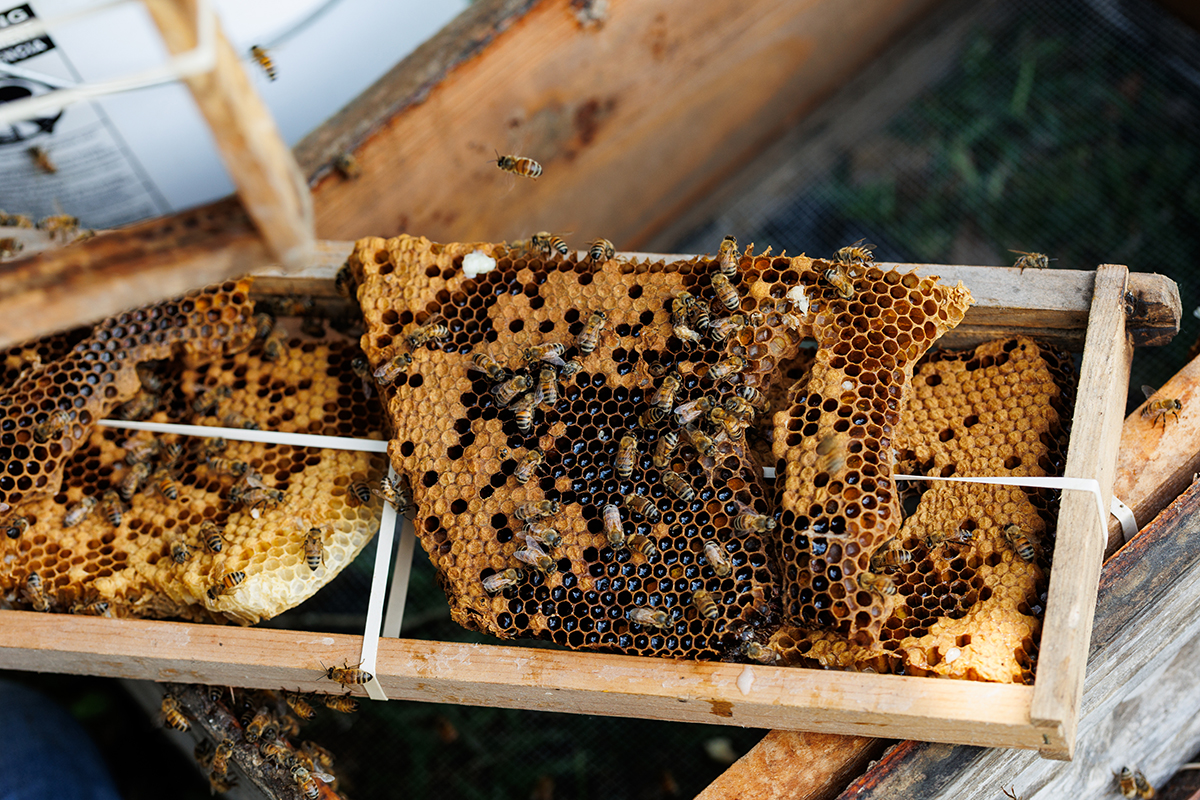
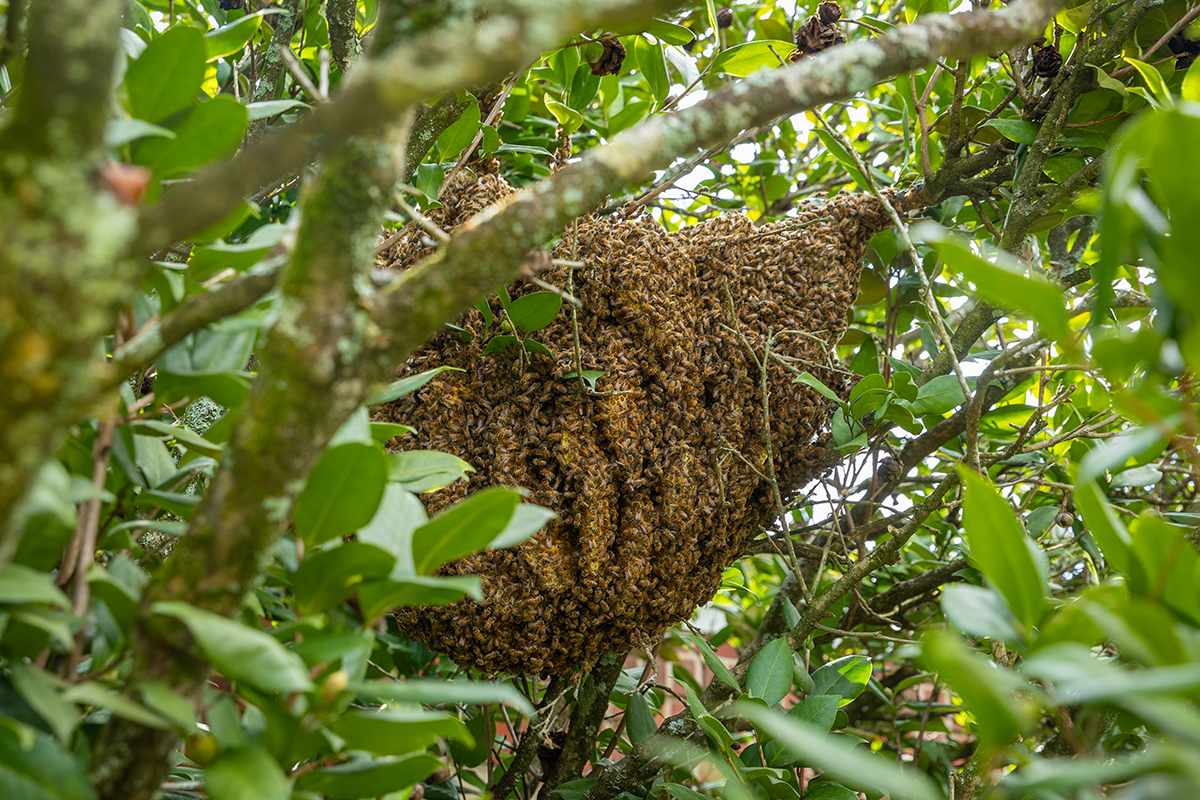
The University of Louisiana at Lafayette has been housing more than a few unexpected residents on its campus, but unless you looked closely, you may not have bee-lieved it at first.
A large hive believed to contain nearly 15 pounds of bees was discovered hanging from a camellia tree in early September between Foster and Girard halls on the UL Lafayette campus. Beekeeper Rachael Clayton, who was called in to remove and relocate the “open-air” hive, estimated that it held at least 65,000 bees.
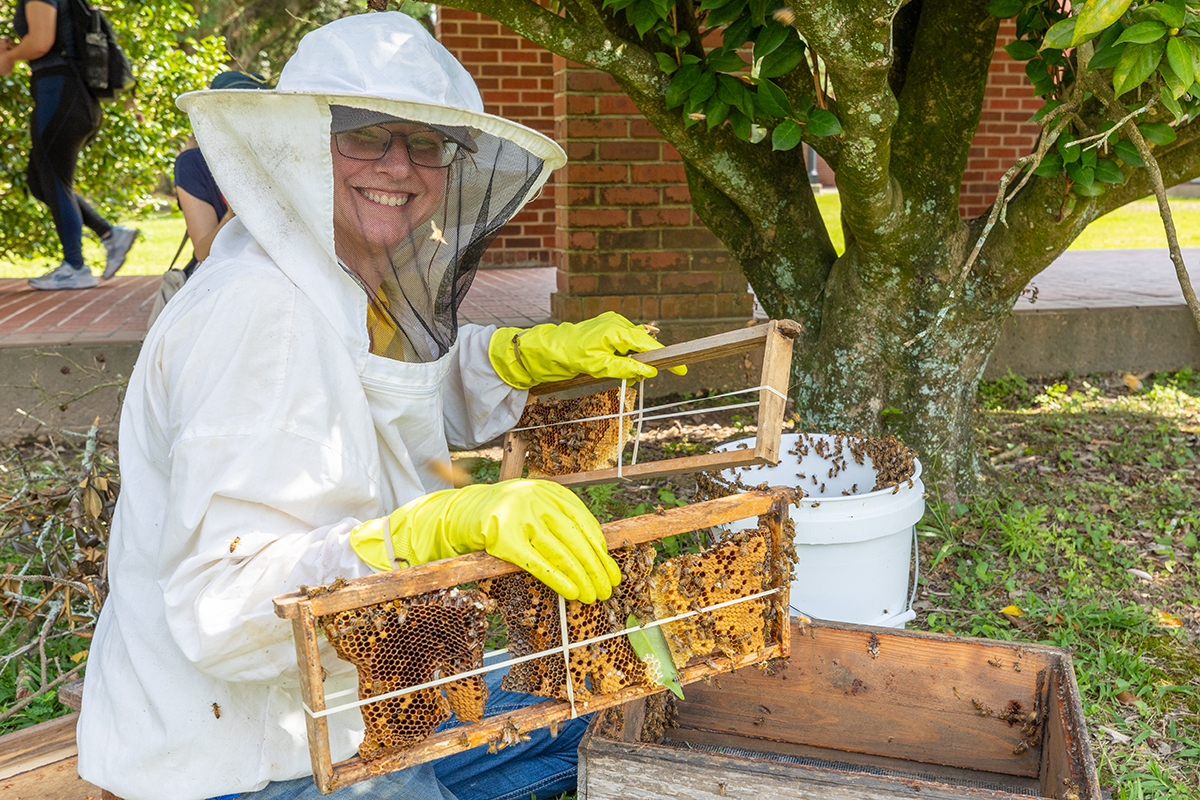
“(An open-air hive) means that they didn’t tuck into a hollow of a tree or hole, and they’re not in a beekeeper’s box,” she said. “This can only happen when we have a long period without rain.”
Clayton, who graduated from UL Lafayette in 2012 with a bachelor’s degree in geology, has 10 years of beekeeping experience and owns a honey farm with her husband, Michael, called Sunshine and Clay Hives in Crowley. She also owns approximately 45 bee colonies spread over three locations, including Judice, where this colony will be relocated.
She suggested that a swarm of European honeybees began building the hive sometime in June. “It definitely has been here for quite some time, because it’s pretty large,” she said.
Dr. Mark Genung, an associate professor in the School of Biological Sciences at UL Lafayette, said that a hive of this size is extremely uncommon in an area as densely populated as a college campus. “I don’t think that we’d see one this large in the wild very often,” he said.
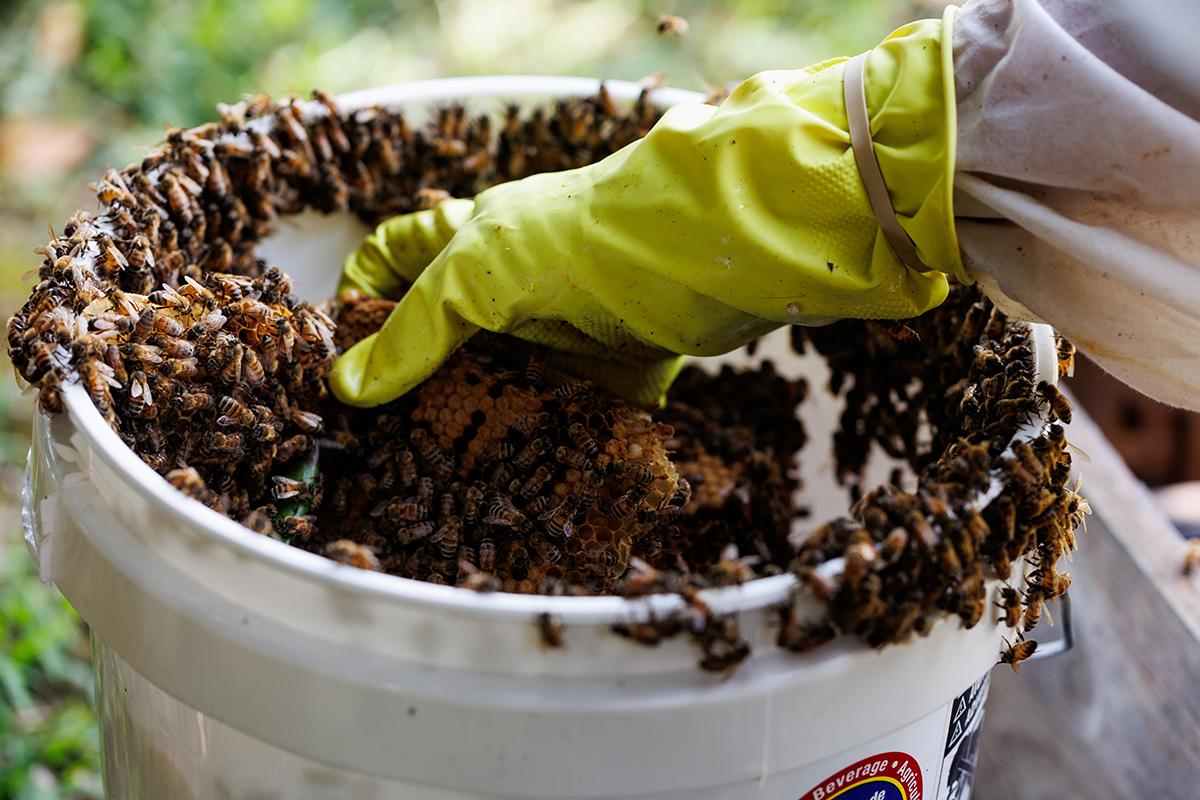
Honeybees are unique among bee species because of their ability to remain active over the winter, enabling them to build up their colony size faster than other species native to the area and giving them a headstart once the spring season begins. Genung said that this advantage may have been what enabled the hive to reach such a large size.
“In the spring, when flowers start (to bloom), they’ve got hundreds or even thousands of workers ready to go,” he said. “They’re kind of evolutionary marvels.”
As students and passersby crossed the sidewalks around the buzzing scene, it was impossible for many not to stop and take a peek up through the branches at the massive hive. Although some were hesitant to approach, Clayton assured the crowd that bees are not typically aggressive, particularly in South Louisiana where Africanized, or “killer bees,” are uncommon.
“We don’t really see Africanized bees, and that’s usually what people are most afraid of,” she said. “Our weather is just too humid.”
Genung said that the swarm most likely originated from a managed colony that grew too large for its previous hive. “Over time, when they get too large for where they’re living, they will send out scouts and start new hives,” he said, “and I think something like that’s likely what’s happened here.”
Clayton echoed this sentiment, adding that the presence of this swarm on UL Lafayette’s campus indicates that the city’s ecosystem is healthy and flourishing. “What it says is that you have enough environmental resources for them to fill up whatever space they had where they were, and establish new queens,” she said. “The old queen will leave with all of her older bees, and they’ll go find a new place to live.”
Carl “Taz” Wininger, the University’s executive director of Institutional Risk and Assessment, said that it was important to relocate the hive, rather than simply dispose of it, because of the vital role that bees play in pollinating plants, which helps to support UL Lafayette’s campus landscape as well as the broader ecosystem.
“By safely relocating the hive,” he said, “the University was able to protect the campus community while also demonstrating our commitment to environmental stewardship and the preservation of beneficial pollinator populations.”