The University of Louisiana at Lafayette has been awarded almost $2.1 million by the Louisiana Department of Health as part of an initiative to improve health care services and health outcomes in rural communities across the state.
UL Lafayette’s College of Nursing & Health Sciences was awarded nearly $1.6 million. The University’s Center for Applied Artificial Intelligence was awarded $498,723. Each grant will support a different component of LDH’s Louisiana Rural Health Transformation Program.
The initiative brings together health care providers, academia, industry, state agencies and community leaders to address health care challenges in rural areas, including limited access to care, workforce shortages and a lack of operating funds.
The College of Nursing & Health Sciences has been enlisted to help bolster the state’s nursing workforce. The Center for Applied Artificial Intelligence will develop an AI platform to streamline and standardize data essential to health care providers in rural areas.
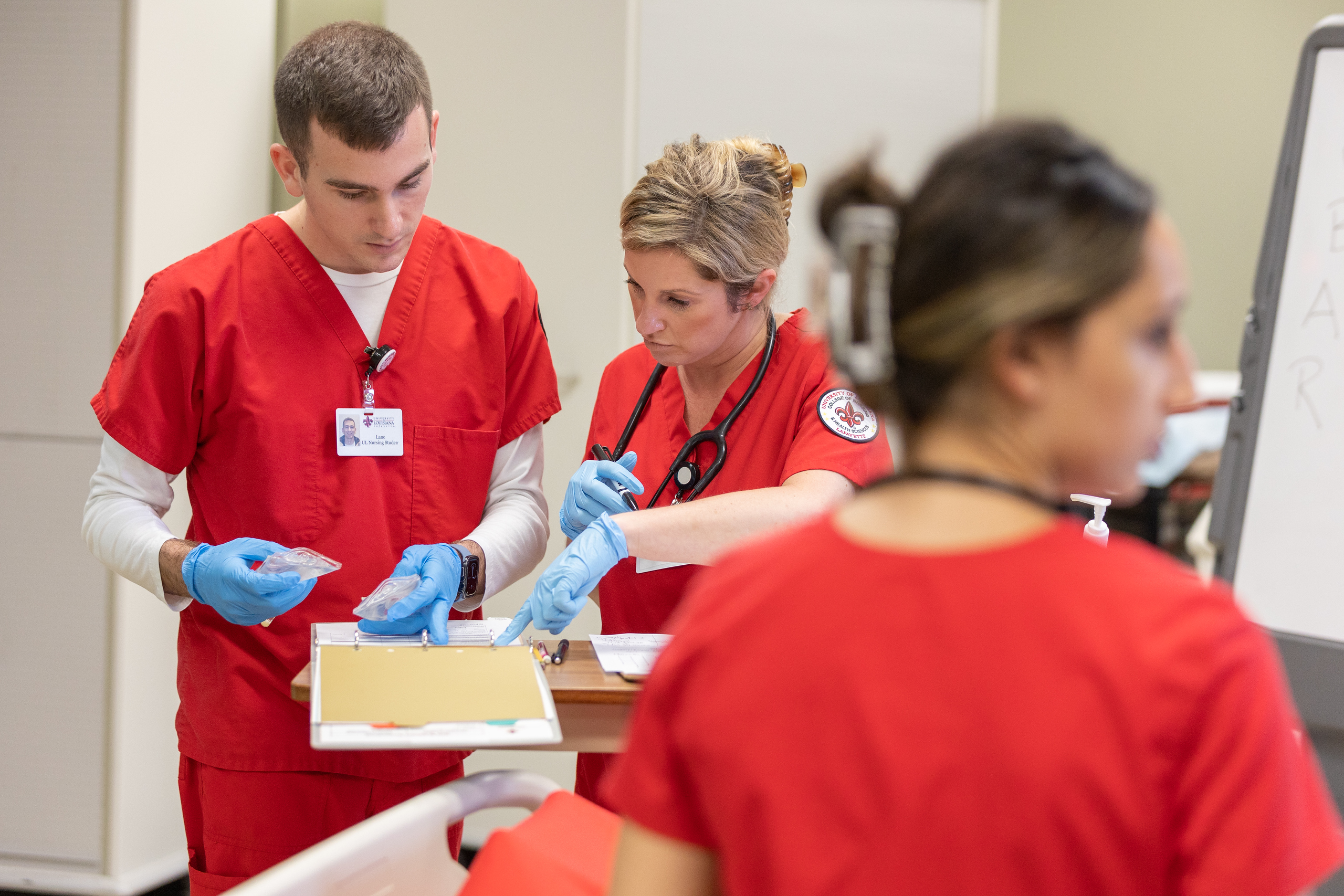
Dr. Lisa Broussard, dean of the College of Nursing & Health Sciences, said its portion of the award will fund academic programs and faculty and student support services. It will also be used to foster partnerships with rural health care facilities, where students will engage in clinical experiences, and launch workforce development initiatives.
“We prepare a significant portion of the region and state’s registered nurse workforce, and this is simply an extension of that role. The overall objective is to increase the number of registered nurses prepared to work in rural areas and increase enrollment and retention in our prelicensure nursing program,” Broussard explained.
The University’s Center for Applied Artificial Intelligence – along with its Louisiana Center for Health Innovation and its planned National Science Foundation AHeAD Center – will help the state bolster rural health services and outcomes in a different, yet equally essential, way.
University researchers are building an AI-based geographic information system that will enable health care officials in rural clinics to compile large amounts of data – including information specific to their communities and regions – to indicate what services are needed and where those services are most needed.
Among the many challenges rural health clinics face is the lack of access to information related to unmet health care needs in rural areas, said Dr. Raju Gottumukkala, director of the Center for Applied Artificial Intelligence.
“To obtain federal funding, clinics must prove a need for services, show what their community lacks, how those needs compare to the rest of the state, and where investing resources would be most beneficial. That can mean weeks of manual research pulled together from scattered state and federal datasets. Many rural clinics don’t have adequate staff to do this,” he added.
The AI-powered portal that University researchers will develop aims to close that gap with a system that will advance the decision-making capabilities for rural clinics and program managers.
“It will bring together statewide data to help identify communities with the highest unmet need. A clinic will be able to assess regional access barriers, workforce shortages and social drivers of health, and determine funding it qualifies for,” Gottumukkala said.
“Bringing AI tools into the hands of users takes more than using AI models; it requires human-centered design, credible data, and independent validation and refinement based on user feedback to ensure the tools truly support data-driven decision making for rural health,” he added.
Photo caption: The Louisiana Department of Health has enlisted both UL Lafayette’s College of Nursing & Health Sciences (above) and the University’s Center for Applied Artificial Intelligence to help address health care service gaps in rural areas of the state. Photo credit: University of Louisiana at Lafayette
Louisiana Department of Health taps UL Lafayette to improve rural health care
Published