
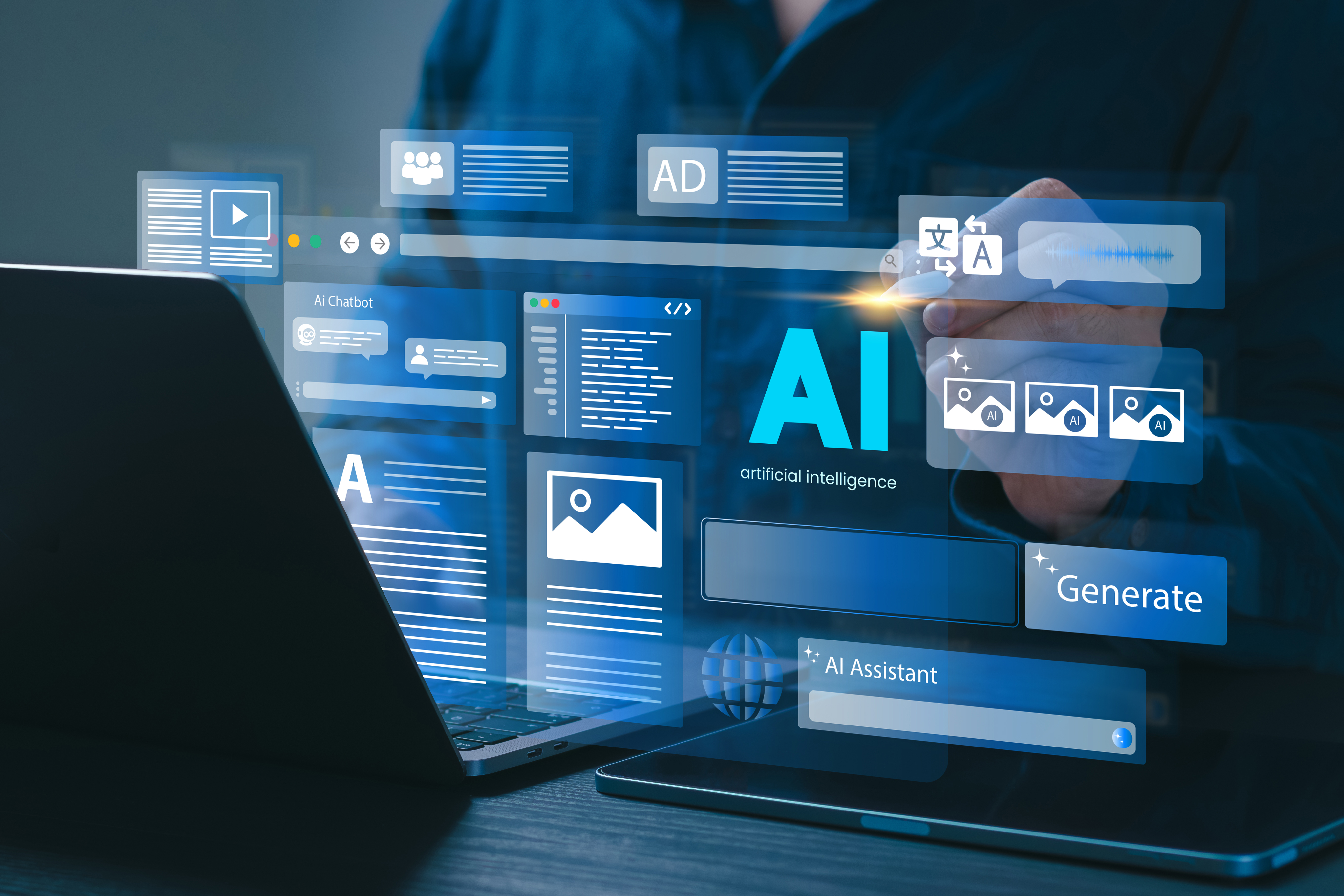
The University of Louisiana at Lafayette’s College of Liberal Arts has launched a Critical AI Studies minor to prepare graduates for a job market that’s being reshaped by artificial intelligence.
But, beyond the medium’s utility as a technical tool, the interdisciplinary minor delves into the ethical, social and humanistic implications of AI in the workplace. The minor is the first of its kind in Louisiana.
“Using AI effectively requires more than technical proficiency. It requires AI fluency – which is basically having the critical thinking skills and the analytical skills to use AI responsibly,” said Dr. Jessica Pearce, associate dean of the College of Liberal Arts.
Courses for the Critical AI Studies minor, which is open to students from any major, will begin this fall. The 18-credit-hour curriculum combines a blend of required courses and electives in disciplines such as business, information technology, history, philosophy, psychology and informatics.
While much of the uncertainty surrounding AI’s emergence centers on the effect it will have on job security, the critical AI studies minor taps into an opposing dynamic: AI literacy stands to increase job opportunities in data-driven world that enhances the need for critical problem solving and decision-making skills.
“Companies increasingly need employees who understand AI’s limitations and risks, who can evaluate content and spot biases or misinformation and who can make sound, informed judgements based on what they see,” Pearce explained.
Workforce trends back up that idea.
According to the Future of Jobs Report issued last year by the World Economic Forum, advancements in AI and information processing are expected to be the most impactful technology trend in the next several years.
The report, which is based on surveys of over 1,000 employers in 55 countries, found that analytical thinking remains the single most sought-after core skill among employers, ahead of dozens of other competencies including leadership, social influence and technological literacy.
“AI is good at things like generation and execution, but not necessarily at things like knowing what questions to ask or if a given output is altogether reliable. Those are people-centric skills,” Pearce said.
Photo caption: UL Lafayette’s College of Liberal Arts has launched a Critical AI studies minor to prepare graduates for a job market that’s being reshaped by artificial intelligence. The interdisciplinary minor is focused on the ethical, social and humanistic implications of using AI in the workplace. Photo courtesy of iStock/Getty Images