
University of Louisiana at Lafayette researchers are examining ways to help people living with aphasia more effectively communicate with their friends. The two-year study, funded by a $371,000 National Institutes of Health grant, aims to reduce social isolation and loneliness in people living with the condition.
Aphasia, which affects over 2 million people in the U.S., is a communication disorder caused by brain injury, most often stroke, according to the National Aphasia Association. It impacts a person’s ability to use language, creating difficulties with speech, reading, writing and understanding others.
Although it doesn’t impair intellect or memory, people with aphasia are often considered confused and deficient. The toll on relationships is substantial, said Dr. Jamie Azios, an associate professor in the College of Liberal Arts’ Department of Communicative Disorders.
“Family usually sticks around, but many people with aphasia lose most, if not all, of their friends in the months following a stroke. This can lead to depression, anxiety, physical health problems and premature death,” explained Azios, the study’s co-principal investigator.
“We plan to combat this with an intervention program that helps people with aphasia maintain non-familial relationships,” she added. “Communication is the basis of all relationships, so speech therapists will use the program to coach a person who has aphasia and a friend of theirs, providing strategies on how they can better communicate.”
Dr. Natalie Douglas, an associate professor in the UL Lafayette’s Department of Communicative Disorders and Dr. Beenish Chaudhry, an associate professor in the University’s School of Computing and Informatics, are co-investigators. Graduate student Mary McMahon, who is pursuing a Ph.D. in applied language and speech sciences, is also contributing to the project.
Dr. Brent Archer, a Bowling Green University researcher who earned his Ph.D. in applied language and speech sciences from UL Lafayette in 2016, is co-principal investigator. Archer and Azios, who earned her Ph.D. in applied language and speech sciences from the University in 2015, are longtime collaborators.
The team’s work will build on a previous series of studies and consultations that was conducted by University researchers. That project resulted in a prototype intervention program – Aphasia: Nurturing Connection, Honoring Ongoing Relationships, or ANCHOR.
The program consists of three, hour-long sessions that are facilitated by speech pathologists for people in the acute stage of aphasia rehabilitation and a friend. ANCHOR also includes a digital platform that reinforces key program content for friends, who can access outside of the sessions. The current NIH study will be built around a randomized clinical trial with 80 participants – 40 people with aphasia and 40 of their friends. Evidence-based results will enable researchers to gauge the effectiveness of ANCHOR, examine ways to enhance it, and inform a larger trial.
“It’s a significant project because we’re developing a program focused on social participation and well-being. And that’s different than what NIH has historically funded – things like imaging research, or brain stimulation research, or impairment-focused research,” Azios said.
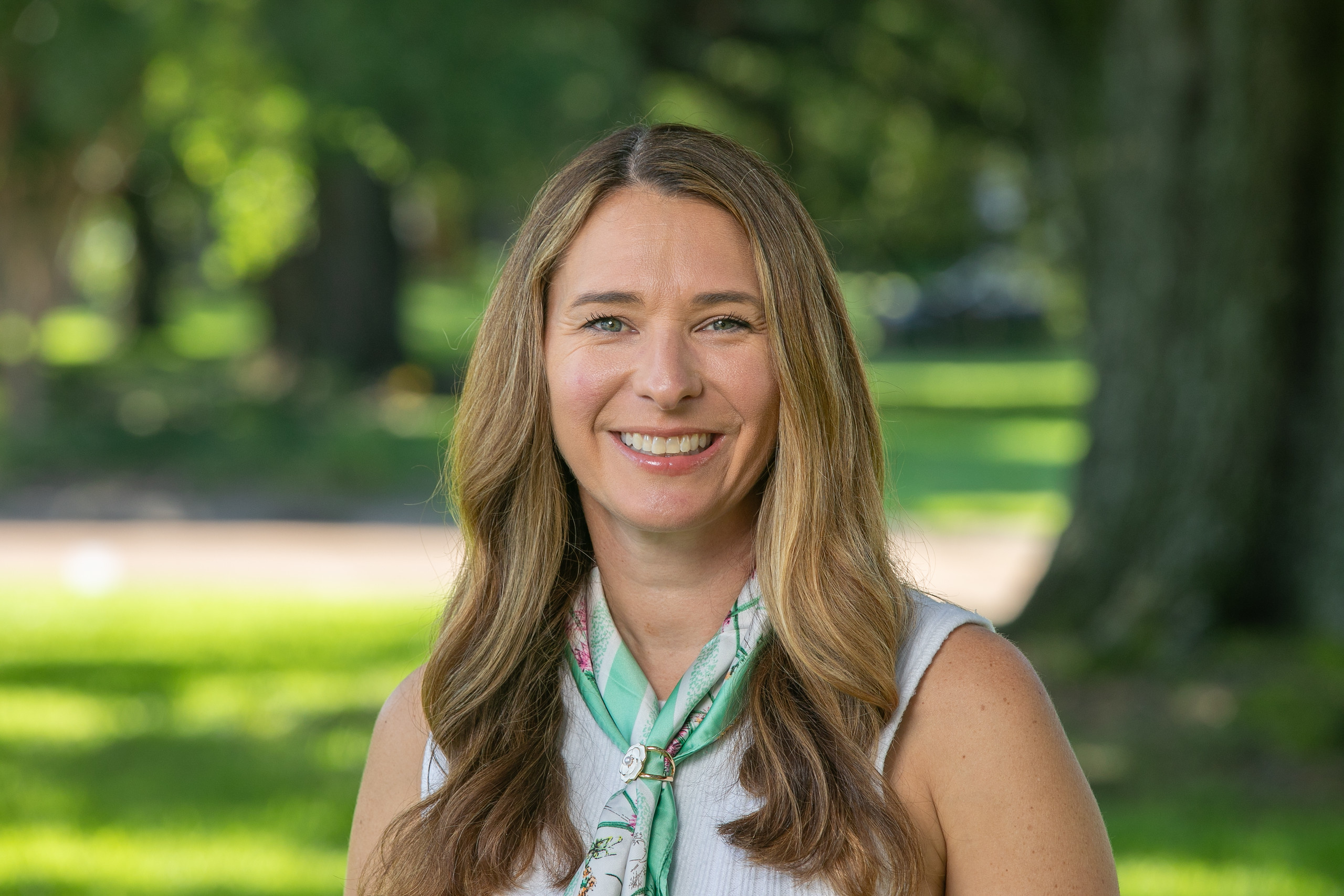
Photo caption: The Department of Communicative Disorders’ Dr. Jamie Azios is leading a two-year study funded by the National Institutes of Health to research ways people with aphasia and their friends can better communicate. The project aims to reduce social isolation in people living with the communication disorder, which causes difficulties with speech, understanding others, reading and writing. Photo credit: Doug Dugas / University of Louisiana at Lafayette