
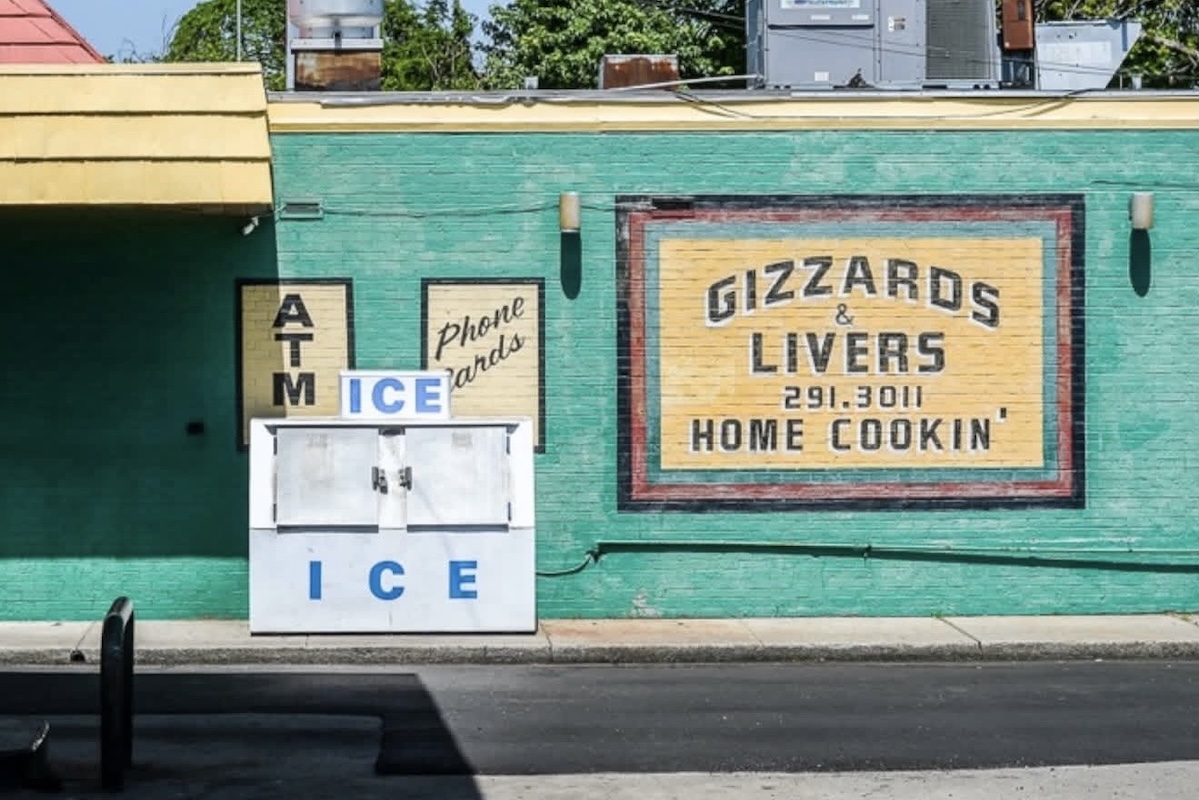
Gas station plate lunches, Waffle House specials and Shipley’s Do-Nuts are all on the menu of Get It While It’s Hot, a new book of essays that explores the culture of eating by the side of the road in the U.S. South. Shelley Ingram, professor in the UL Lafayette Department of English, edited the compilation for LSU Press. She joined La Louisiane to discuss how she and her colleagues got the idea for the book (spoiler: it all started with fried chicken) and why these often overlooked foodways provide a window into the people and places that shape the South.
Watch the conversation on YouTube by clicking the link above or read the edited transcript below.
Marie Elizabeth Oliver
This is such a fun topic for a book that will resonate with a lot of people who live here in the Acadiana area. How did you come up with this topic and get interested in this from an academic point of view?
Shelley Ingram
I've written about food and foodways, and some friends and colleagues of mine have done the same. We've all been writing about the importance of food to place and identity. And one day, we had talked about growing up eating at the Dodge store. We don't really have a lot of Dodge stores here, but I grew up in Mississippi, and the Dodge store is a gas station that is just all kinds of fried stuff. It's unbelievable if you've ever been to a Dodge store. And someone posted a meme on Facebook that was something like, "only in the Dodge store," and it's this row of fried stuff. And I was talking with some friends, and we just said, "Hey, let's write a book about this. Why has no one's done this? Why haven't we talked about this really important kind of part of our culinary landscape from when we were younger, working retail and trying to make ends meet?” This was a really important part of the landscape. So, let's write about it. Then we just did it, and we had a really good response, and continue to have a good response. So, maybe volume two comes out in a few years. Who knows?
Marie Elizabeth Oliver
Well, I have to say, I was craving fried chicken after I read this book
Shelley Ingram
For sure!
Marie Elizabeth Oliver
And the collection focuses on food, but like you were saying, so many of the stories are drenched in nostalgia and really people. What has been sticking with me is the piece about the candy ladies, the women who were selling candy and snacks in their neighborhood, and how that was a constant across different regions. Did you expect that focus going into the book?
Shelley Ingram
I think we knew enough, being folklorists and having worked a lot with food, that it was going to lead to these kinds of conversations. But I don't think we quite expected the vast range of food and foodways and places and people that we got in the book. People heard this and immediately thought of something like a candy lady, or they thought of you know this Waffle House, or you know this Chicken Hut. It brought up so many things for so many different people that I think we were really not surprised at the kind of content, but just the depth and the breadth of this and how it spoke to so many people.
Marie Elizabeth Oliver
One thing I thought was interesting was how — I think you mentioned this in the introduction — we think of gas stations having food, but that really it was these convenience stores that came first, and then the gas stations attached themselves to these convenience stores. So that was an interesting historical fact.
Shelley Ingram
Yeah, I got really kind of invested in the history of the gas station and the convenience store. You know, it's such a — you might call it a “throwaway place,” right? It's just a place that you have to have, but you don't pay much attention to it. But it's so many people's livelihoods, and it's where people get food. Like my grandfather would go to — I mention it a little bit in the book — the gas station every morning and drink coffee to talk to people as a way of kind of staying in touch with people in his retirement and what could otherwise be a really lonely kind of time of life. So, we're thinking about them as more than just a place where you buy convenient items. It was just a lot of fun. But the history of them and thinking about the architecture. I know when we interviewed Stephanie Stuckey, she talked a little bit about her grandfather's ideas about the architecture of the place, like all of that was so interesting. It's these places that otherwise we might ignore or not find important or relevant. If you just spend a little bit of time thinking about it, it kind of opens up. There are lots of really interesting things happening in these places and with these people who spend their lives there.
Marie Elizabeth Oliver
Yes, the Stuckey's was interesting. The Shipley's Do-Nuts was really interesting, and that just these family legacies, kind of piping through these spaces, and how their identities were wrapped up in this brand, and so that was that was really cool as well. A lot of it also is representative of women as sort of the purveyors of this food and marginalized communities. Can you share why that was so important for you to include?
Shelley Ingram
I think it's always important for us as scholars — and as people — to make sure that the stories being told are the stories of the people who actually make things work, right? And we knew that no book like this could ignore all of the people who make things work, and that the people who make things work are often women and often people from minority communities, often people of color. There's a lot of startling facts in this, but the fact that immigrants own more than half of gas stations in the U.S. The fact that the majority of food service workers are people of color. That the reason we have food and gas stations a lot of times is because the wives of the men who owned it would cook and sell their food, right? Those are stories that have to be told and that are very important to the history of not just this, not just food, but of labor and travel and all of that in the U.S.
Marie Elizabeth Oliver
Yes, and I imagine it also has influenced the type of food that is showing up in these spaces, too. Just how eclectic it is, and that's what people seem to love about it, too: That surprise of not knowing what's behind the counter.
Shelley Ingram
And not knowing what you're going to find when you walk in, right? You're going to find egg rolls next to corn dogs, and they're going to be both delightful, right? And yeah, a lot of times the place you'll find food that is not necessarily the food that you ate growing up is going to be in these kinds of gas stations in these spaces because of the economic necessity and realities of food service. That you're going to find the Indian food in the truck stops, and you're going to find incredible southern soul food in gas stations. Really, it has colored how we think about the culinary landscape of the South.
Marie Elizabeth Oliver
Do you have a favorite type of gas station or convenience store food?
Shelley Ingram
Oh, too many. I really love biscuits, so I love breakfast biscuits. Any place that sells a good breakfast biscuit, I'll be there. That's really one of my favorites.
Marie Elizabeth Oliver
It's a good choice. The essay that you wrote specifically highlights the work of Southern writers Jesmyn Ward and Attica Locke. They use food as symbols of love, but also of power. Why do you feel like food is such a good metaphor in fiction?
Shelley Ingram
That is such a good question. We all have to eat to live. It's something that we have in common, and because we all have to eat to live, food is an important part of our every day. We have to think about food.
Marie Elizabeth Oliver
Three times a day.
Shelley Ingram
Three times a day, right? At least three times a day, we have to think about food, and the procuring of food, and what happens when you don't have enough food. All of that just shapes so much of our daily lives. That food becomes more than just something that you eat to survive. It becomes an integral part of your day-to-day life. Then, the sense most closely connected to memory is smell, and you can't eat without smelling, right? So much of what we eat can connect us to our past. We think about what our parents cooked, what our grandparents cooked, what we ate in childhood. Maybe we've moved from our home country, and it's just such an important part of everyone's lives. And who controls food has a lot of power. And so, there's always power dynamics involved, both in the fact that it's something we have to do to live, and yet we have to have money to do it, right? And so, there's a constant negotiation. But at the same time, it's like the first thing that our mothers do for us. It's how our grandparents showed us love. You know my grandmother would make these — she was not a great cook (sorry, Dad, if you're listening) — popsicles with Kool-Aid, and you know she'd have them in the freezer for us when we were kids every time we'd come over. We'd always say we want a popsicle, and that was her way of showing us that she was thinking about us. So, food becomes a really powerful symbol in fiction. It's also something that goes into our body. So, food is very intimate, right? It's something that crosses this this border between outside and inside. Yeah, it's dangerous. It can hurt us at the same time that it sustains us and fulfills us. If you've never really thought about it before, and then you start thinking about it and you start reading it, you're going to see it everywhere. Characters in books don't have to eat, but because they do, you have to say, "Wait a minute, that might be important, right? That might be meaningful. Let me pay attention to that."
Marie Elizabeth Oliver
I like that. That's really interesting, and I know this wasn't a book focused on Louisiana, but it did have a lot of inclusion in the book. And Louisiana convenience stores and gas stations are known for their specific flavor. What do you think makes the gas stations and convenience stores here so special?
Shelley Ingram
I think it's because you get kind of food that you don't get anywhere else. It's a kind of food that tells you you're in Louisiana, and that's always really important, right? Food is a marker of regional and cultural identity, which I didn't even talk about, but it is. It's a huge part of regional and cultural identity. And because people in Louisiana love their food so much, it shows up in the places — meat markets and at gas stations and at these little holes in the wall. I think it's just the kind of food that you might not see other places, and it's the people that sell it are just so excited for you to eat the food, and they really want you to love the food, and that comes across, too. I think that's pretty special.
Marie Elizabeth Oliver
You mentioned this in the book, but just having these meat markets are such a big part of the stores themselves, and the hot plates and the plate lunches and all of those traditions that kind of really revolve around these stores, more than certain restaurants.
Shelley Ingram
They really do. You know, when I first moved here, so many of the places were only open 'til two because they're meet and threes. That's what they sell, and these quick-service, food places are able to function in a community. They don't have to have this giant overhead. They don't have to have this really fancy building. It's good people, cooking good food and selling it to you, and they really want you to love it. And because of that, because there's such a pride in the food culture here, I think that really comes across in the in the gas station food. And it just tastes good, right? I mean, you know, boudin and meat pies, all of that you can get at gas stations.
Marie Elizabeth Oliver
Now, we have so many boudin shops, but originally it was like — you just got it at the gas station.
Shelley Ingram
Yeah, that's where you got it. Yeah, at the meat markets. That was the only place you could get it, right? Because that's where people were. Ken Wells has a new book about boudin that just came out with LSU Press. I haven't read it yet, but I'll find out more when I read that book.
Marie Elizabeth Oliver
Why do you think this type of scholarship is so important? What do these stories say about our culture, not just for present readers, but also for future readers? Why is it important that we publish this type of work?
Shelley Ingram
You know, we were worried when we first submitted the manuscript that people were going to think it was too accessible for academic audiences. But we thought, we have academics, scholars, food writers. We all have these stories to tell, and I think it's important that we let people voice their experiences, even if it's outside of a typical academic kind of essay. We do have a lot of personal essays in here. We have more traditional academic articles. We have interviews and scholarship that looks at the things that we take for granted, the kind of day-to-day life that we lead. It's why I love being a folklorist. It's that these things are meaningful, and people have meaningful lives outside of the academy. They have meaningful lives outside of fancy restaurants, and there is a culture there that thrives and that matters, right? And that any time we can call attention to this kind of stuff that matters for people who are living their day-to-day lives, I think it's important. It's really good, both as a way to let people know about it, and also to provide a record of what was. And I think going forward, you're going to see more of these kinds of straddling the line between academic and public scholarship because we feel it's incredibly important that we're not just writing for ourselves but that we're writing for everybody. My dad has been reading this, and he never reads any of my books, but he's been reading this one. He called me to correct me about something just the other day that there are meat markets in Mississippi as well. And I'm like, "OK, Dad, yes, I know. I will make sure in Volume Two will write about that." So, I think that's really important — both that people see themselves reflected in the book, but also that we say, "Hey, look at the way that people are surviving and thriving and making their own meaning and culture outside of these traditional centers of power."
Marie Elizabeth Oliver
Well, there is such depth in all of the pieces. You can tell just what you were saying earlier about food touching us in in deeper ways. You can tell every person who contributed. There were so many layers.
Shelley Ingram
It was always about food, but other things, too. We had some incredible contributors. We were just so lucky to have the group of writers that we did contribute to this book.
Marie Elizabeth Oliver
Wonderful. Well, is there a place where people can get this book if they're interested in learning more?
Shelley Ingram
Sure, you can go to LSU Press's website. That might be the best place to start. But you can find it at any kind of online retailer.
Marie Elizabeth Oliver
Well, thanks so much for joining us today.
Shelley Ingram
Thanks so much for having me.
Marie Elizabeth Oliver
Anything else before we go?
Shelley Ingram
Just to say that when I first moved to Lafayette, I was scared of the traffic, and I didn't drive a lot. But I was living right next to the gas station that has the Athenas in it, and so I ate there once a week for the first year because I was scared of the traffic. Gas station food has fed me throughout my years here.
Check back next month for more discussions with members of our University community. KRVS is listener supported public radio for Acadiana, a service of the University of Louisiana at Lafayette.
This story is part of La Louisiane, the official magazine of the University of Louisiana at Lafayette. Published since 1989, La Louisiane covers the University's research, students, faculty, alumni and Louisiana culture. La Louisiane is an award-winning publication recognized by the Council for the Advancement and Support of Education (CASE).
Audio production: Clint Domingue / KRVS Video production: Kade Parker / University of Louisiana at Lafayette
Cover photo: Courtesy of Kate Medley