
Dr. F. Wayne Stromeyer, a retired pathologist, spent his career analyzing human cell structures through a microscope and making diagnoses. As he approached retirement, he and his wife Cheryl — a Louisiana architecture scholar — decided to move a Creole house from 1825 in the Opelousas-Washington area through the Atchafalaya Basin, across the Mississippi River, and into Baton Rouge, jump starting his seemingly endless journey into historical preservation.
They wanted every detail of their new home, Chêne Vert, to be as historically accurate as possible. However, when Stromeyer attempted to restore the garden, he realized no one could tell him exactly which camellias Louisianans were planting before 1860.
"People didn't know," he recalled. "We said, 'It's time for us to go figure this out.'"
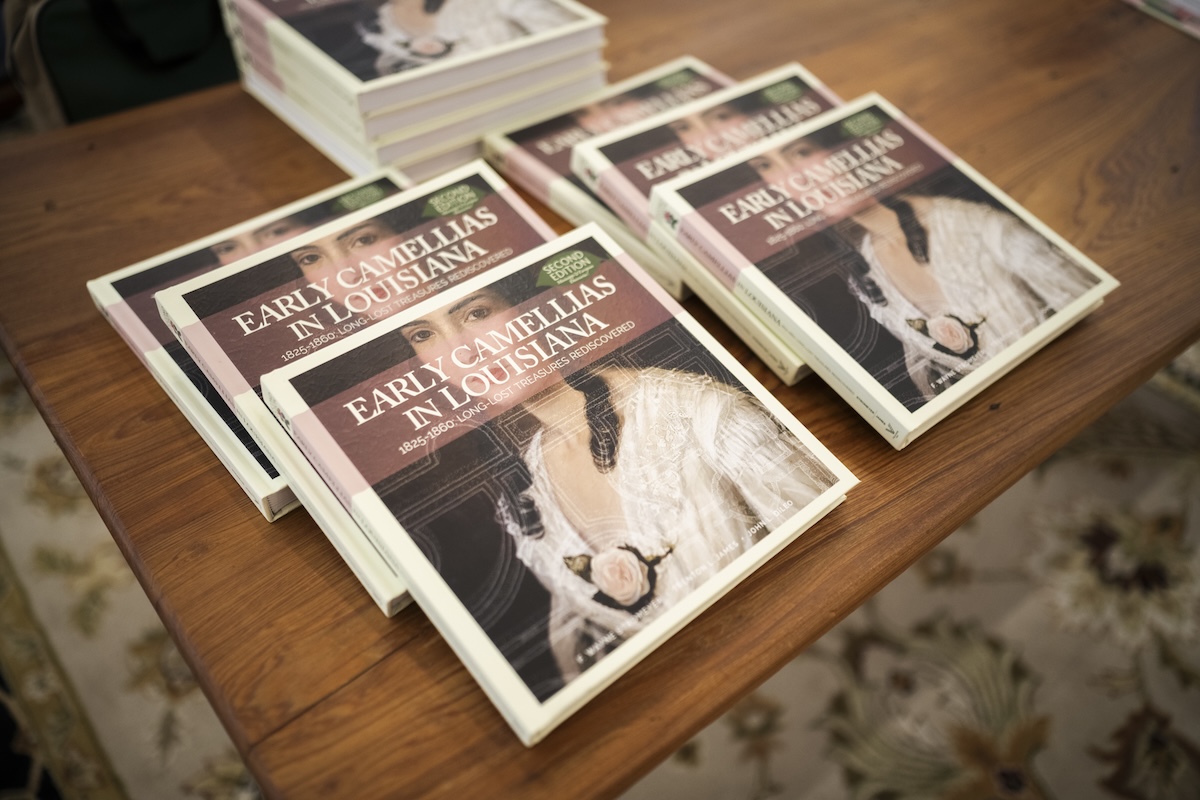
Over the past 13 years, their combined efforts have resulted in the book Early Camellias in Louisiana (1825-1860): Long Lost Treasures Rediscovered published by Vellichor Press, which has been expanded into a second edition to include the rich histories of Natchez and Woodville, Mississippi.
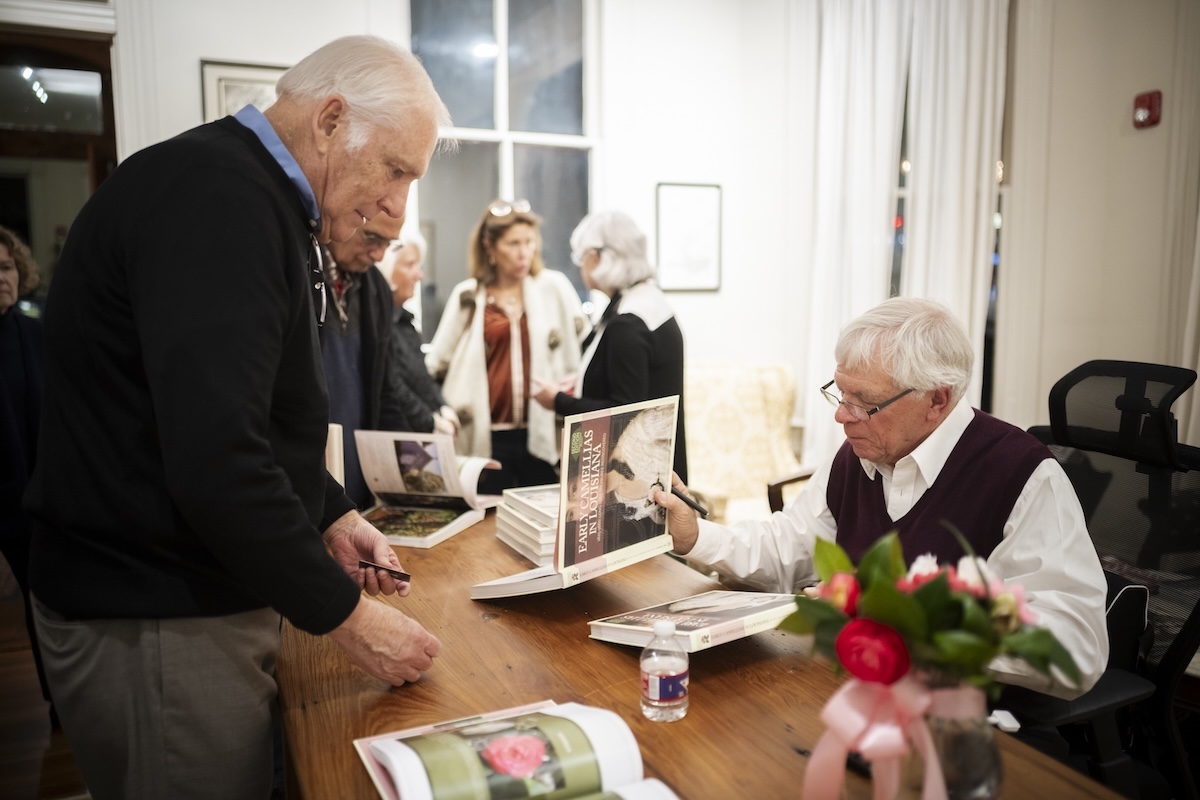
In January, Stromeyer spoke about his research during an event hosted by the Center for Louisiana Studies at the historic Roy House on the University of Louisiana at Lafayette campus, sharing his insights and findings about the ancestral camellias of South Louisiana.
Crucial to the research was Stromeyer's co-author, Dr. Trenton L. James. The long-time family medicine physician urged Stromeyer to focus on the broader picture, providing just the right balance for his detail-oriented approach.
"He always teases me and says I got too much into details," Stromeyer said. “But we work very well together."
Stromeyer and James are also bringing species back to life through various plant reproduction methods, also known as propagation.
The team’s research is grounded in records from Rosedown Plantation, detailed journals written by Martha Turnbull while she cultivated her garden at her home in St. Francisville, Louisiana. By 1854, she had already established 94 different Camellia japonica varieties.
"But now that we've been through [the 1854 records], we have found all of these, except for four," said Stromeyer. “We're now growing them and reproducing them."
During the 19th century, these flowers were more than lawn decorations. They were highly prized accessories clutched or worn by ladies during the winter social season when the gardens reached peak bloom.
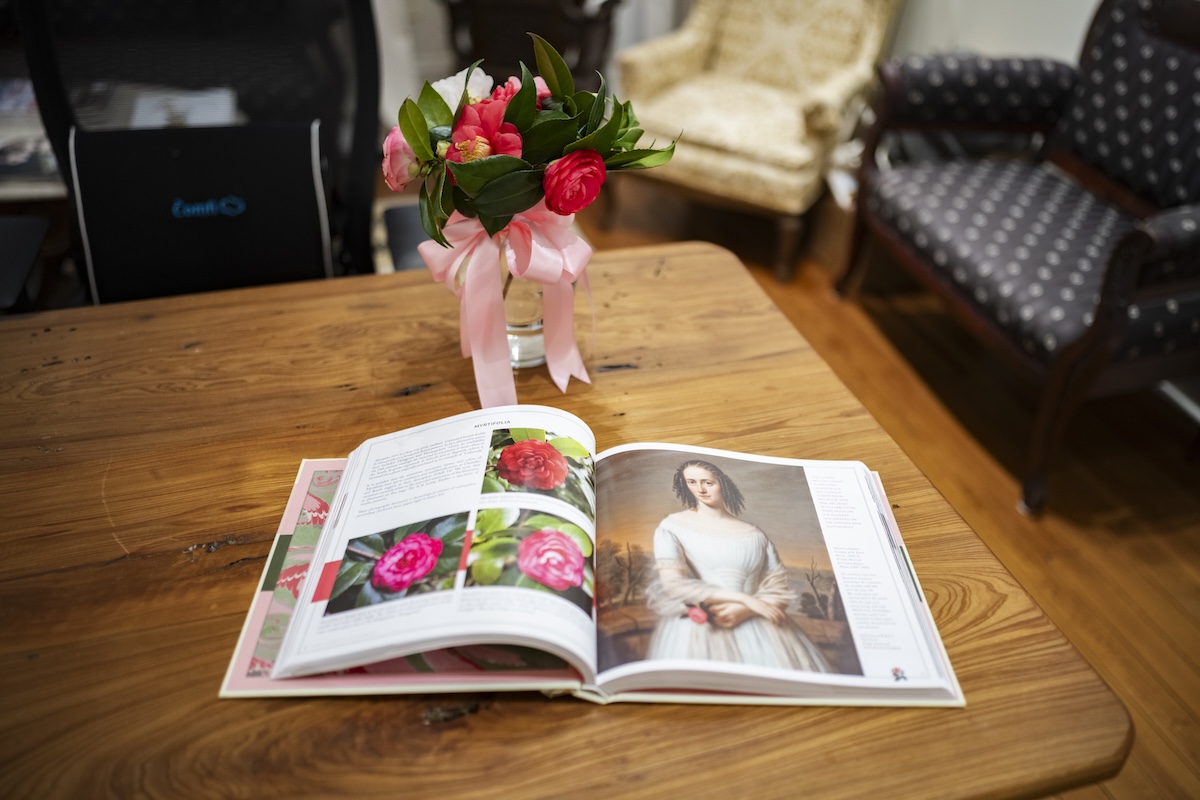
To identify camellias today, the team uses illustrations of flowers by 19th-century botanical artists and horticulturalists Alfred Chandler and William Chandler Booth as visual blueprints to pinpoint varieties that were unidentified for 200 years. This rigorous methodology enabled them to replace what Stromeyer jokingly called "SWAGs" (Scientific Wild Ass Guesses) with "DAWGs" (Documented Assisted, Wise Guesses).
By viewing these forgotten flowers as long-lost treasures, Stromeyer said plant lovers can participate in the passion of restoring Louisiana's history, turning an everyday walk through an overgrown garden into a historical adventure. Stromeyer insisted that the work is not fully done, inviting his audience to look closer at the plants in their own communities.
"Maybe we can find some other lost treasures and propagate them,” said Stromeyer. “The field is rich."
Photo caption: Dr. F. Wayne Stromeyer gave a presentation on the second edition of his book, Early Camellias in Louisiana (1825-1860): Long Lost Treasures Rediscovered, at the Roy House. Photo credit: Somer Greer / Center for Louisiana Studies