
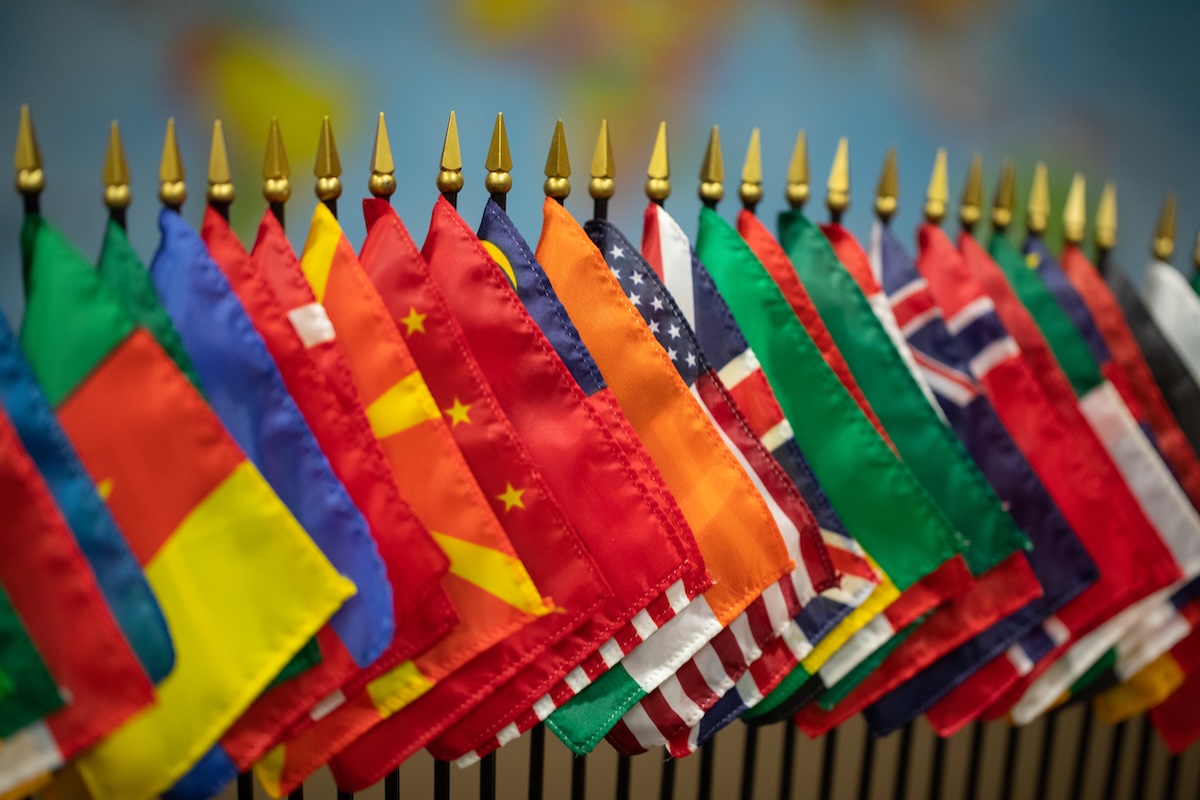
The University of Louisiana at Lafayette has created a world intercultural studies concentration for students pursuing a bachelor’s degree in modern languages. The new program is designed to help meet a growing need for professionals capable of working across cultures and countries.
Courses for the new concentration, which is being coordinated by the College of Liberal Arts’ Department of Modern Languages, will begin this fall. The curriculum will focus on the linguistics – and the historical, political and social perspectives – needed by graduates who want to be able to effectively communicate with clients and colleagues from other parts of the world.
“The world intercultural studies concentration will provide a high degree of language and cultural competency for work in international settings and at home, the sort of expertise and insight that is now necessary for employees and business leaders to thrive in a global economy,” said Dr. Nathan Rabalais, head of the Department of Modern Languages.
The capacity to bridge communication gaps across cultures, which influences customer behavior and decision-making, is an increasingly marketable skill as companies in most industries steadily expand their global presences by opening offices in other places, marketing products and services internationally, or using remote work that requires collaboration among employees in different countries.
The Future of Jobs Report issued last year by the World Economic Forum, which was compiled based on a survey of over 1,000 employers in 55 countries, indicated that being able to successfully work across cultures, once a soft skill, has become a strategic necessity. The international organization, based in Geneva, brings together business and political leaders to address global economic and workforce trends.
“More and more, employers value cultural fluency in our interconnected world, an understanding of not only what is being said, but how it’s being conveyed and what might be missing or lost in translation. With technology driving this interconnectedness, the human connection and knowing how to adapt and respond in different cultural contexts is in high demand,” Rabalais explained.
Practical language skills are at the foundation of the 33-credit-hour world intercultural studies concentration, which includes 18 hours of core courses within the Department of Modern Languages. The curriculum also includes 15 hours of interdisciplinary electives in disciplines such as politics, history, communications, literature and anthropology.
The concentration's capstone project offers students opportunities tailored to their interests and goals such as participation in one of the University’s study abroad programs or completing fieldwork or service learning with entities that have an international focus.
Learn more about the world intercultural studies concentration, or email Rabalais at nathan.rabalais@louisiana.edu.
Photo caption: UL Lafayette has created a world intercultural studies concentration for its bachelor’s degree in modern languages. The program will provide expertise that enables graduates to effectively communicate across cultures, an increasingly marketable skill in a global economy that requires collaboration among clients and colleagues from different parts of the world. Photo credit: Doug Dugas / University of Louisiana at Lafayette