
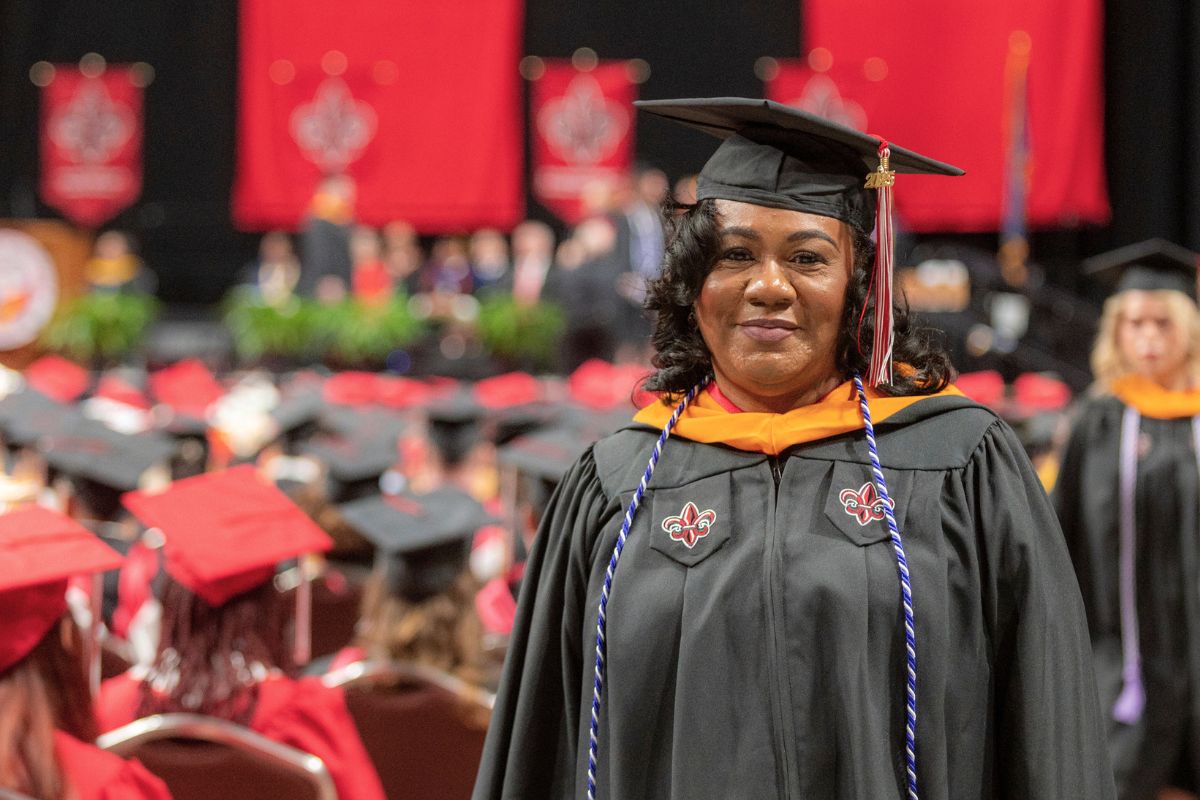
At the Acadiana Treatment Center in Sunset, Louisiana, Carla Lavergne works with girls facing burdens far beyond their years.
Some are as young as 12. Others are in their teens, arriving with the effects of abuse, addiction, and trauma shaping how they see their future.
Lavergne’s job isn’t just clinical. It’s human.
She administers medication and provides total patient care, but what defines her care is knowing when to be firm, when to be gentle, and when a patient simply needs someone willing to listen.
“My goal is to be a sort of motherly figure to them. They want somebody they can talk to, and you have to give them that time,” she says. “But you also have to know when to be firm to keep them safe.”
In 2022, she was recognized for her approach by the Louisiana State Nurses Association District 4 as one of Acadiana’s Top 25 Nurses, an honor celebrating nurses who demonstrate excellence in practice and leadership.
With years of exceptional practice with complex patient care and high-pressure hospital environments, Lavergne began to consider how to move forward in her nursing career.
“I’d been an RN in bedside nursing for so long, and enjoyed my interactions with patients and families,” she says. “But I realized I wanted a more active role in assessing, diagnosing, and managing patient care.”
That goal led her to the University of Louisiana at Lafayette’s online Master of Science in Nursing program, with a concentration in Family Nurse Practitioner, where she could advance her clinical training while continuing to care for her patients.
Choosing the Online MSN
As a full-time nurse, mother, and caregiver, Lavergne needed a program that could fit into her life.
Her father was bed-ridden with advanced Alzheimer’s, and she was helping her mother care for him while working and supporting her family.
The flexibility of UL Lafayette’s online MSN program gave her room to study during breaks at work and manage family responsibilities without losing momentum in her coursework. A structured curriculum and schedule kept everything on track.
“Instead of driving to campus and being in class all day long, you can open your computer and do your lesson when you have the freedom to do so."
In the middle of the program, Lavergne’s father passed.
The week of his funeral, Lavergne planned to withdraw, unable to take an exam scheduled for that week. Her instructors, however, offered a different path. They granted an extension, encouraged her to take time, and stayed connected.
“They could have just said, ‘Go ahead, resign and come back,’” she says. “But they didn’t. They said, ‘Take a week off, then call us.’ We set a new exam date, and I stayed in the program because of that.”
Her mother began dialysis not long after. The responsibilities didn’t stop, and neither did the support from faculty.
“They encouraged me throughout the whole process,” she says. “I never had time for myself during the program, so you must have good time management. You have to want this to be able to stay in an online program.”
Building Advanced Clinical Confidence
The MSN curriculum changed how Lavergne thinks as a clinician.
Her favorite course, NURS 507: Health Assessment and Diagnostic Reasoning, “touched on everything,” she says, strengthening her clinical judgment and ability to care for patients across ages and backgrounds.
“The program gave me the knowledge to assess patients more thoroughly, especially when it comes to mental health,” she says. “Even though I didn’t specialize in psychiatric mental health for my MSN, working in a psych facility makes me want to go back for the post-MSN certificate.”
That training now shapes how she collaborates with physicians and evaluates treatment plans in practice.
“With the coursework and clinical component, the program is designed to help you recognize treatment plans and communicate clearly when talking to the physician about a patient.”
What Comes Next
Now a graduate of UL Lafayette’s online MSN program, Lavergne is preparing for her family nurse practitioner certification exam and strengthening her connection to advanced nursing practice, scholarship, and lifelong learning.
She’s active in the American Association of Nurse Practitioners and Sigma Theta Tau International Honor Society of Nursing, Delta Eta Chapter.
“After I take my national certification exam, I want to transition into a practice as a nurse practitioner where I can continue building clinical confidence and learn from strong mentors,” she says.
Looking back on her journey through the program, Lavergne has simple advice for nurses working through the master’s program.
“Never give up on yourself, no matter how hard things get,” she says. “There’s no race to the finish line. Do this for yourself, not to prove anything to anyone. When you do, the journey is more meaningful.”
Level up your nursing practice with UL Lafayette's online MSN degree program.